Hello again, friends! I’m so excited to share the journey of my latest project with you. This time, it’s a transformation story centered around a spacious apartment terrace—one that needed a complete rethink to become a modern, functional and family-friendly outdoor haven.
Terraces today are more than just open areas; they can be the heart of a home when designed thoughtfully. And this project is a perfect example of how the right flooring, zoning, and lighting can turn an underused space into a stylish, flexible and meaningful extension of the home. From understanding the clients’ needs to reimagining the terrace with a fresh, modern approach, this makeover truly reflects how design can elevate everyday living.
A lovely couple, Vaibhav and Chandni, who were soon to welcome their first child, approached us to design their home, with a special focus on the terrace. Thanks to its generous size and open layout, the space held immense potential. And with a new family member on the way, creating a warm, comfortable, and inviting terrace for quiet moments and quality family time naturally became a high priority.
At Allure Interiorz, our philosophy has always been to retain and reuse as much of the existing structure as possible. It’s a conscious commitment towards the environment, and towards saving our clients unnecessary costs. In our previous project (which you can read about here), we preserved most of the existing elements, including the flooring.
However, this terrace was a different story altogether. It was in a severely worn-out state and required a complete overhaul. Sometimes, starting fresh is the only way to do justice to the space, and this was one such case.
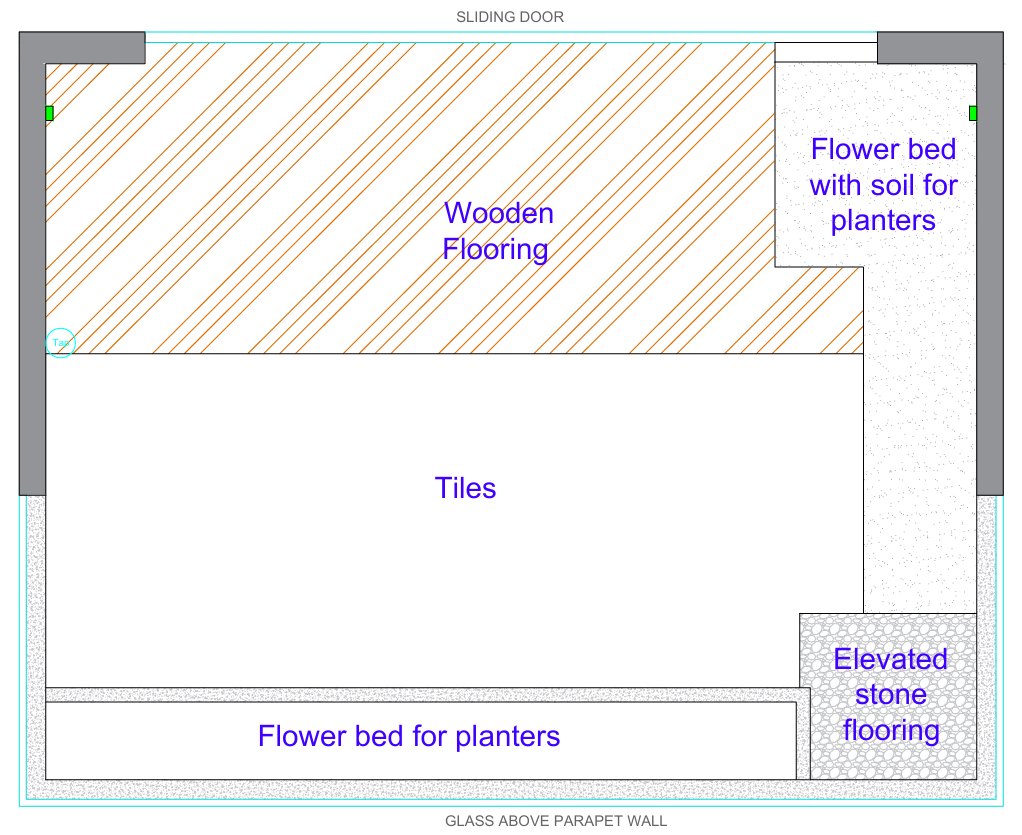
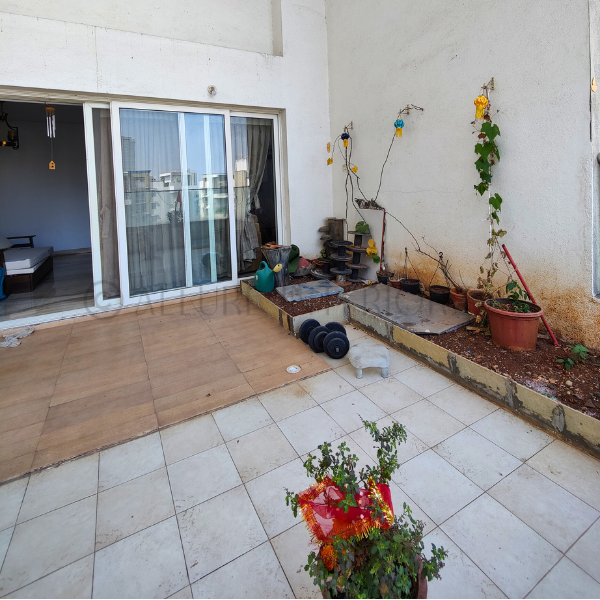
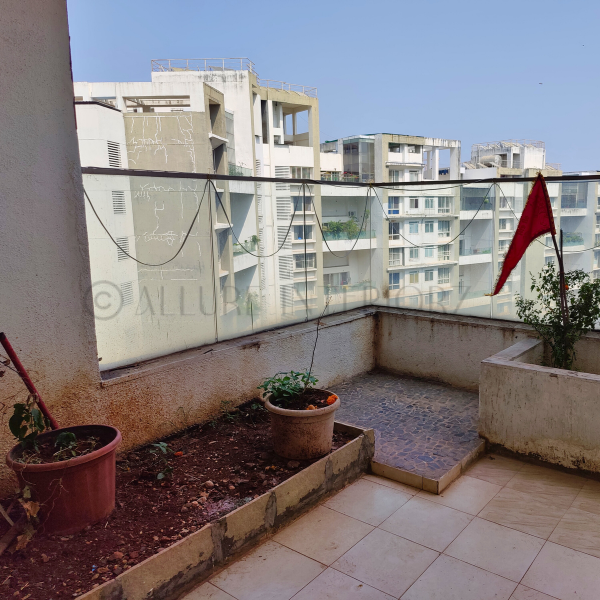
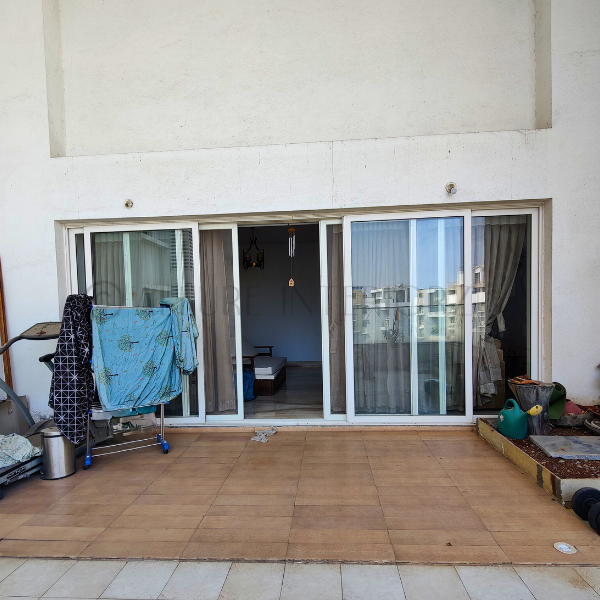
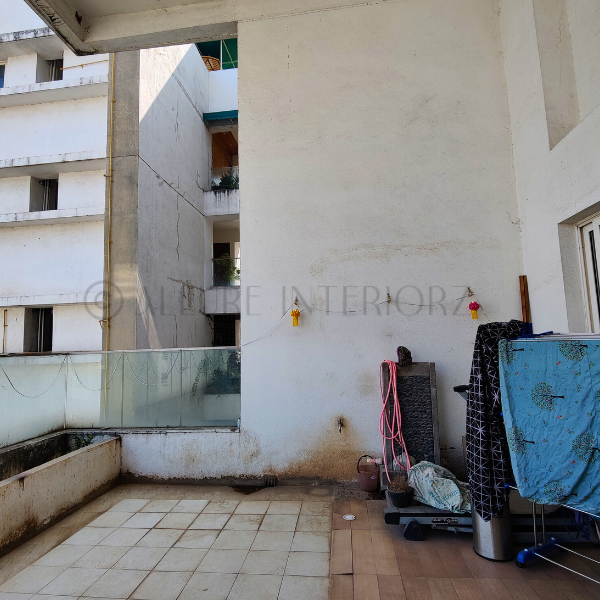
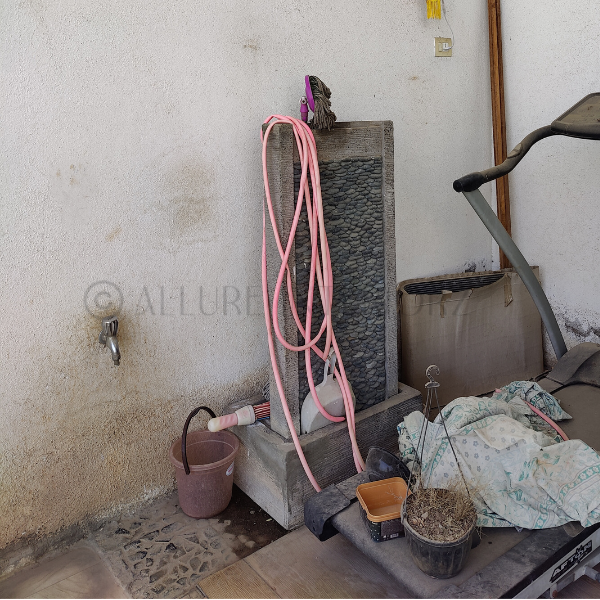
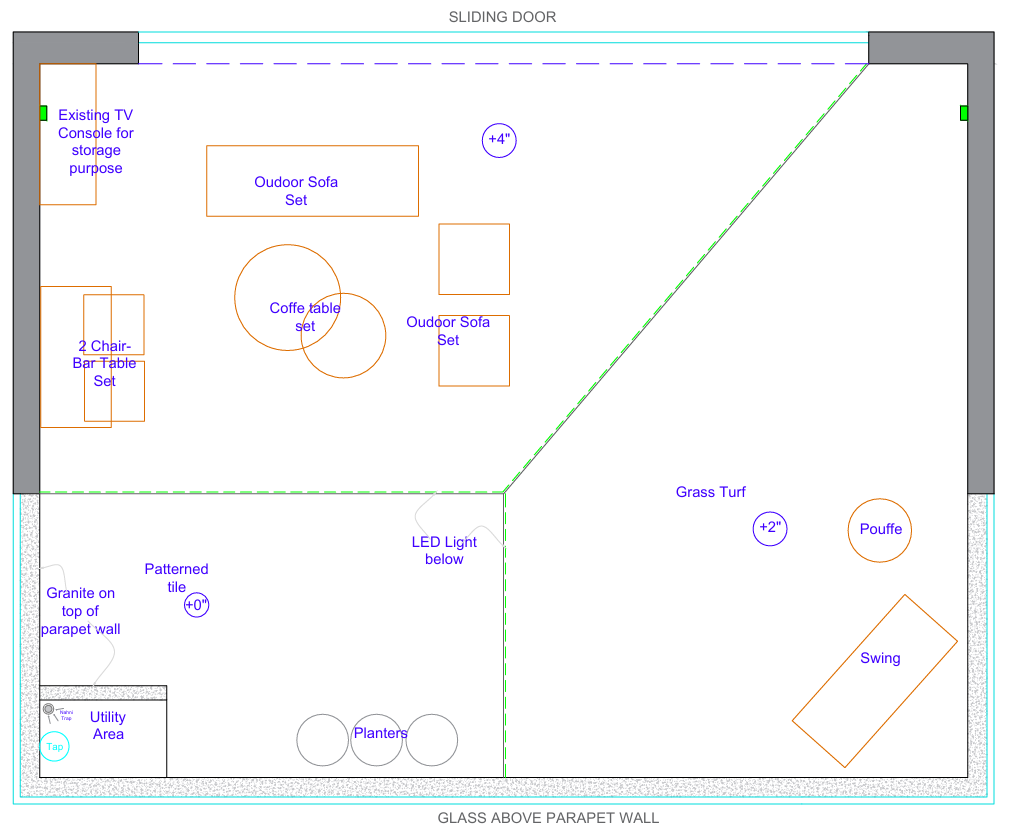
Let me walk you through the space first, so it becomes easier to understand the challenges the family was facing. To start with, take a look at the structural layout followed by the site photos below, they help paint a clear picture of what the terrace originally looked like.
As you can see in the existing layout, the terrace was a patchwork of different elements: wooden flooring in one section, planter beds occupying two sides, and an elevated stone flooring area on one corner. Each of these components stood on its own without any harmony or purpose, and because of this scattered planning, the usable walking space became surprisingly limited.
Moreover, the flooring materials didn’t complement each other. Instead of feeling open and inviting, the terrace felt cramped and broken into disconnected pockets. The layout not only restricted movement but also made the entire space appear smaller than it actually was.
All of these factors together created an environment that was neither functional nor visually cohesive setting the stage for the transformation it truly needed.
The first major issue was the built-in planter beds provided by the builder. These planter beds occupied a significant portion of the terrace, yet they served no real purpose for the family. The clients weren’t using them at all and more importantly, they had no plans to use them in the future either. They were very clear from the beginning that they weren’t plant lovers and preferred a clean, minimal look with little to no greenery.
The second major concern was the stepped, outdated flooring. While the clients were comfortable with retaining a stepped layout, the condition of the existing flooring was far from ideal. Years of wear and weather exposure had taken a visible toll on the transition lines between the levels had completely blurred. The surface itself was dull, cracked in some areas, and visibly damaged, which not only compromised the aesthetics but also raised safety concerns.
Instead of enhancing the terrace, the flooring made the entire space look tired and neglected. It was clear that simply repairing or polishing the existing floor wouldn’t be enough; the terrace needed a fresh, well-planned flooring layout that would not only modernize the space but also define each area more purposefully.
The last major problem and one that immediately caught the eye was the placement of the tap and water outlet trap. They were positioned right in the middle of the wall, sticking out awkwardly and taking away from any possibility of creating a clean, cohesive visual backdrop. Instead of blending in, the fixtures dominated the wall in the most unflattering way, becoming an unavoidable eyesore.
These were the key issues the clients were facing, along with a few concerns we identified during our site visit. With the problems outlined, the next step was to understand the most important aspect of any space—how the clients actually want to use it.
Their requirements were simple yet meaningful. They wanted the terrace to feel open and spacious so their child would have ample room to play. At the same time, they hoped to host friends comfortably. A high table with chairs or stools was on their wishlist something that could double up as a work spot when needed and also make entertaining easy. Flexibility was crucial to them; they didn’t want any fixed or bulky furniture that would restrict movement.
In brief, the major client requirements were:
The most important thing to note here is that while gathering requirements, it’s essential to understand not only what the clients want but also what they don’t want. Both are equally important and play a big role in shaping a space that truly fits their lifestyle.
Since the clients didn’t want any fixed furniture, flexibility became the foundation of our entire design strategy. Every decision from material selection to zoning was made to ensure the space could adapt to different needs without feeling cluttered or incomplete. To achieve this, we focused on creating a strong architectural base using a thoughtful combination of tiles, textures, and lighting. This ensured that the terrace would still feel visually rich and cohesive, even on days when no furniture was placed outside.
We then planned the layout carefully to maintain a balance between openness and functionality. With limited greenery and no built-in elements, the space needed clearly defined zones that worked effortlessly in day-to-day use. Each zone had to stand on its own aesthetically, whether it was being actively used or simply forming part of the overall visual flow.
Because the clients preferred only movable, lightweight furniture, we selected pieces that would complement the design while keeping circulation smooth and unobstructed. The key items included a sleek bar table for hosting, an outdoor sofa set for relaxed conversations, and a wooden console that the clients already owned. In keeping with our philosophy which I often share in my blogs and videos repurposing existing pieces is not only cost-effective but also environmentally conscious. So instead of replacing the console, we gave it a new life by repainting it and using it as compact storage for minimal bar essentials.
This approach allowed us to create a terrace that felt warm, welcoming, and easy to personalize perfect for a young family that values both comfort and flexibility.
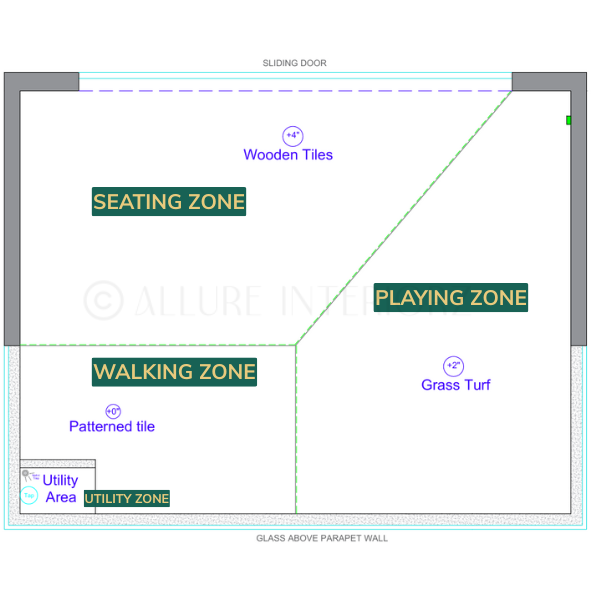
Let me now walk you through the flooring layout the heart of this transformation and the area where the most significant changes took place. Given the generous size of the terrace, it was essential to divide it into four distinct zones. This zoning helped us enhance functionality while creating visual balance across the entire space.
As you can see in the layout, we’ve intentionally used different flooring materials to define, separate, and visually guide movement through the terrace without relying on bulky furniture or heavy decor. Each flooring choice plays a specific role in creating mood, function, and character.
For the seating zone, we chose a warm wood-finish outdoor flooring. This instantly brings a sense of coziness and comfort, almost like extending the living room outdoors. The texture adds depth, and the colour beautifully anchors the furniture, making this corner feel like a dedicated lounge where the family can truly unwind.
The playing zone needed to feel open, safe, and effortless. That’s why we introduced a soft grass turf—perfect for kids to move freely or for the family to sit casually during relaxed gatherings. The gentle green tone adds a refreshing contrast, bringing a hint of nature into the space without relying on plants or bulky planters.
To tie everything together, we used a patterned tile for the walking and transition zone. This acts like a visual guide, seamlessly leading you from one area to another. The subtle pattern adds character and prevents the space from feeling flat or monotonous.
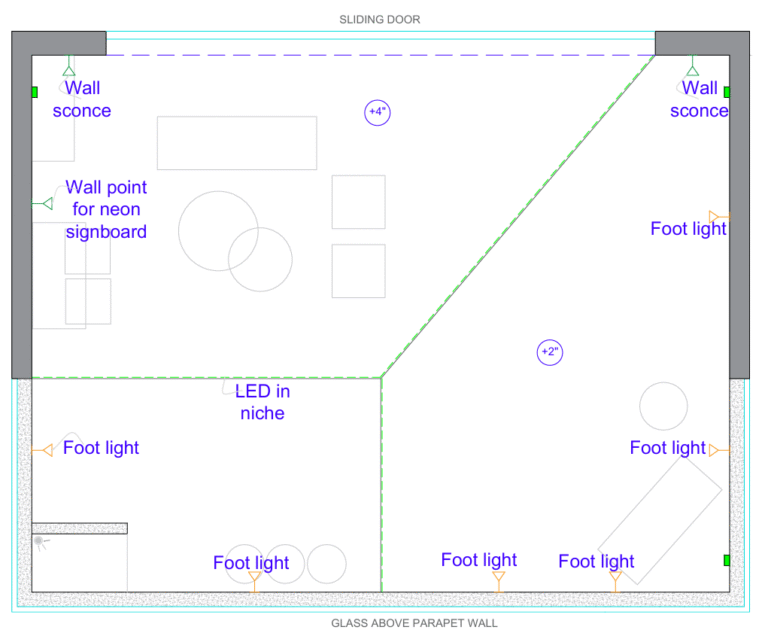
I also want to highlight another important aspect here: all these flooring materials were introduced in a stepped format. The patterned tile sits at 0″ (considered the ground level), the grass turf is raised to +2″, and the wooden flooring is placed at +4″. These gentle level differences brought an instant sense of dimension and interest to the terrace. The steps were further accentuated with lighting, making the transitions not only safer but also incredibly appealing, especially in the evening when the terrace truly comes alive.
Together, the wood flooring, grass turf, and patterned tile create a terrace that is functional, thoughtfully segmented, and visually dynamic. The zoning adds clarity and structure, making the entire space feel complete and cohesive.
So to summarize below are the zones planned based on how the family intended to use the space:
Now, let’s talk about the lighting design. As mentioned earlier, the flooring was divided into different zones using a mix of materials such as grass turf, patterned tiles, wooden tiles, and subtle stepped levels. While these materials helped visually segment the terrace, it was the lighting that truly elevated these transitions and added depth to the entire space.
We approached the lighting design with one simple intention: to make the terrace feel warm, welcoming, and layered, without creating harsh contrasts or overwhelming brightness. Every light was placed with a purpose, ensuring it highlighted the right details and guided movement naturall
For the stepped levels, we introduced soft step lights that gently wash the edges. This not only makes the levels safe to navigate but also creates a beautiful floating effect at night, making the transitions appear seamless and intentional.
In the seating zone with wooden flooring, we added warm-toned ambient lighting that complements the coziness of the wood finish. To make the area more playful and memorable, we also incorporated a soft neon light with a subtle message. This brought a touch of personality to the space, giving the lounge corner a fun, relaxed vibe without taking away from its warmth and comfort. The combined glow subtly frames the area, allowing the family to unwind in a soothing yet uplifting environment.
For the patterned tile walkway, we used linear wall washers to enhance its texture and guide the eye forward. These lights help the pathway stand out even after sunset, giving the terrace a visually connected and continuous flow.
Near the grass turf especially since it’s the play zone we kept the lighting soft yet functional, ensuring visibility while maintaining a calming atmosphere.
Altogether, the lighting layout works hand-in-hand with the flooring choices. Instead of treating lighting as an afterthought, we used it as a design tool to enhance depth, emphasize zoning, and create a cohesive experience. It adds warmth, clarity, and an inviting charm that transforms the terrace completely once the sun goes down.
For this terrace, we didn’t design in fragments or treat each element as a separate task. Instead, we envisioned the entire space as one interconnected canvas from the very beginning. Every decision—whether related to flooring, lighting, circulation, or movable furniture—was made with the full picture in mind. This helped us create a design where nothing feels added later; everything feels like it naturally belongs.
I hope you enjoyed diving into the design journey and understanding the intent behind each choice. We’ll be revealing the final transformation very soon. Until then, I’d love to hear what you think about the concept and the approach we took for this project
Remember to here to keep getting updates
Until Then Take care and Keep learning!!
See you soon…
info@allureinteriorz.com
+91 7420987515
© Copyright 2023. Allure Interiorz. All rights reserved.
Be the first to know about our latest trends, exclusive offers, and the new project updates.
This will close in 0 seconds